

Barefoot Gen
AI Live-Action Trailer
Type of work
Industry
Arts
Year
2026
The concept: Live-action of the Manga Barefoot Gen
This project is an AI-generated live-action trailer that reinterprets Barefoot Gen, the iconic anti-war manga by Keiji Nakazawa, through a cinematic and emotionally grounded lens. Designed as a speculative adaptation, the piece explores how generative AI can be used to translate historically significant graphic narratives into realistic audiovisual storytelling while preserving their emotional weight and cultural context.
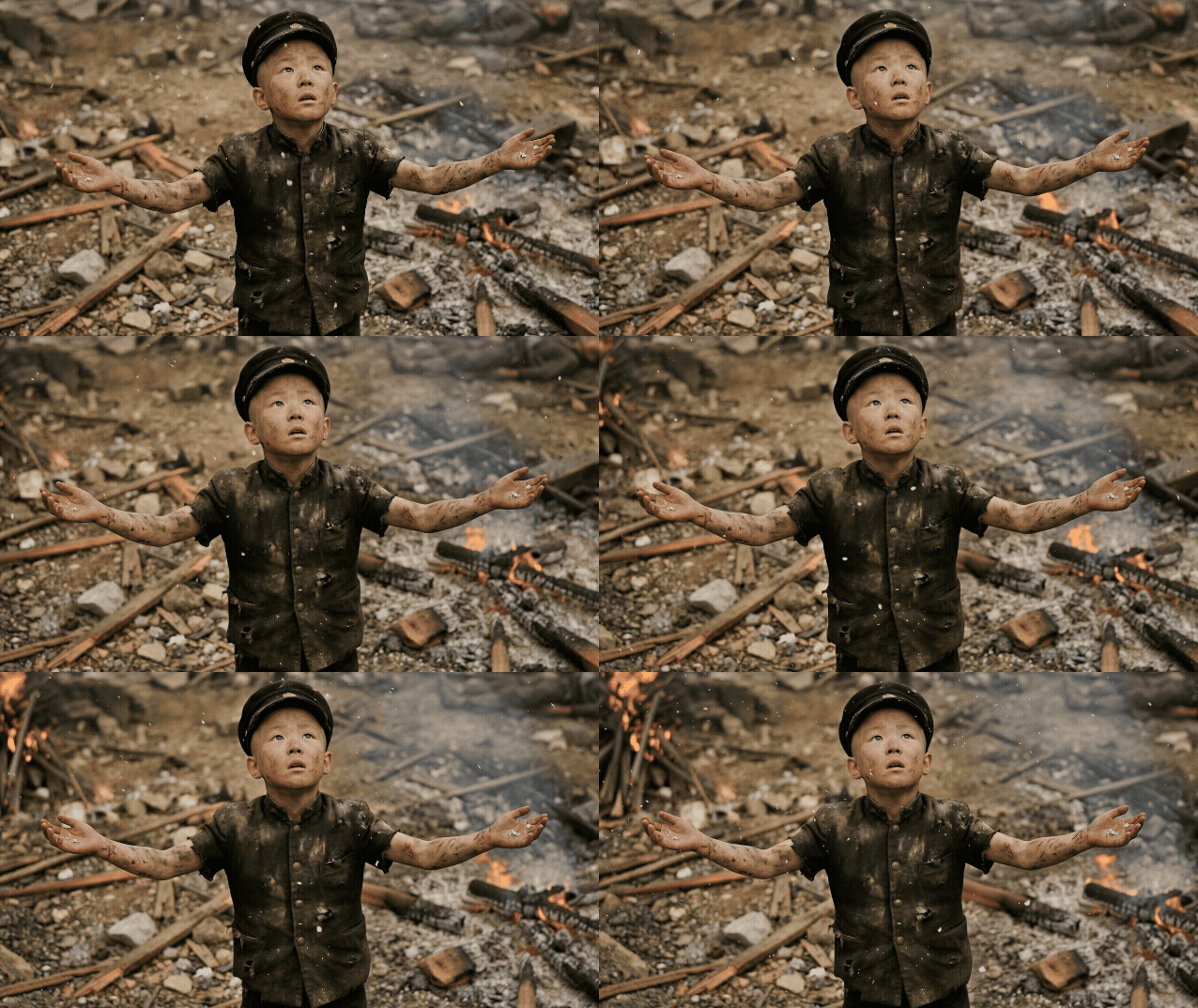
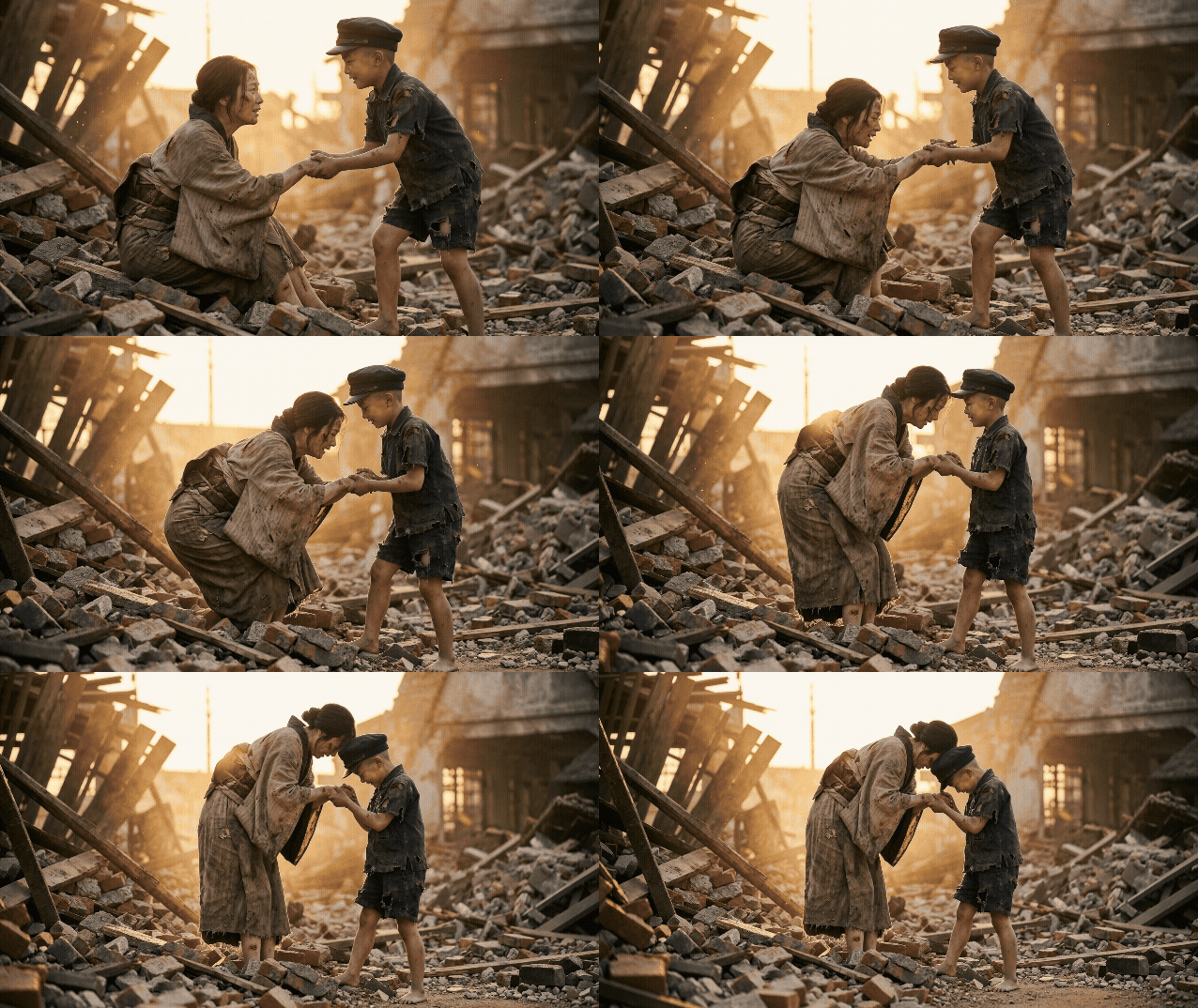
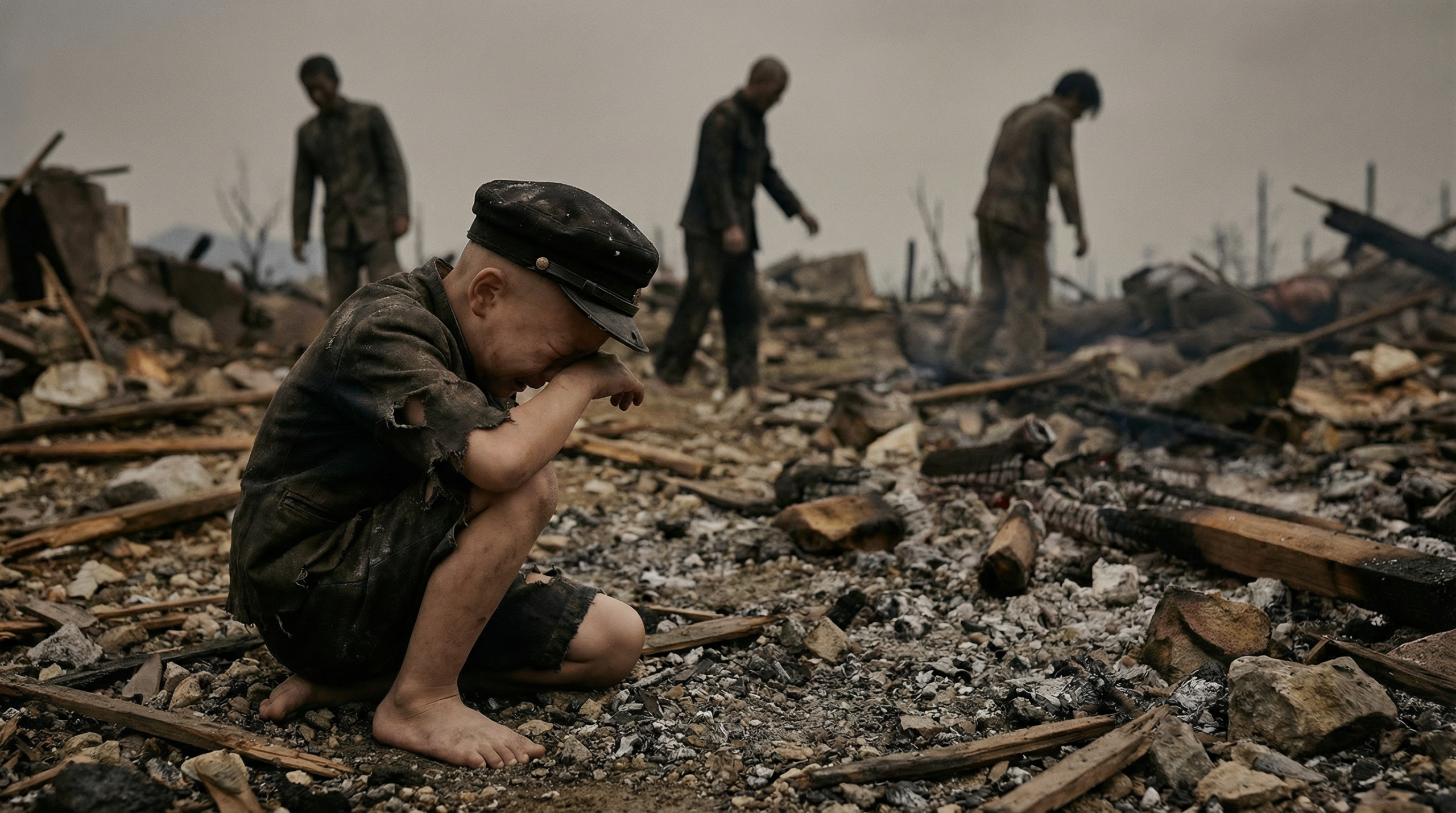
At its core, the trailer follows the story of Gen Nakaoka, a young boy growing up in Hiroshima during the final months of World War II. The narrative builds from moments of everyday life into the devastating turning point of the atomic bombing, capturing both the immediate destruction and the long-term human consequences. The project balances historical representation with a strong character-driven perspective, focusing on resilience, survival, and the enduring message of peace embedded in the original work.
From a creative standpoint, the project tackles the challenge of adapting sensitive and complex subject matter into an AI-generated format. Key considerations include the portrayal of minors, the depiction of war and its aftermath, and maintaining historical and cultural accuracy while working within generative systems. As outlined in the documentation, achieving aesthetic coherence, building a believable character arc, and accurately representing the period were central to the creative process.
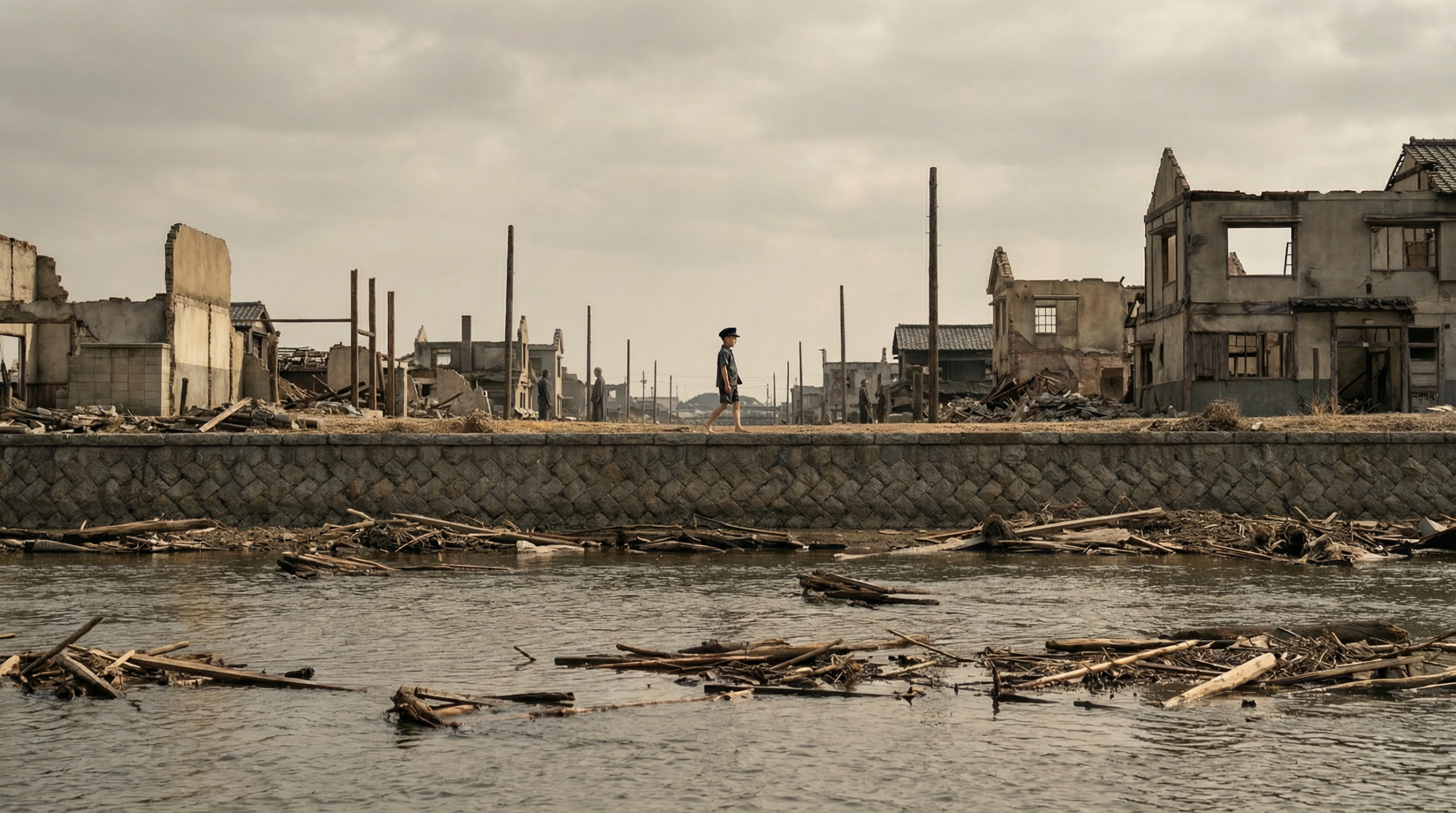
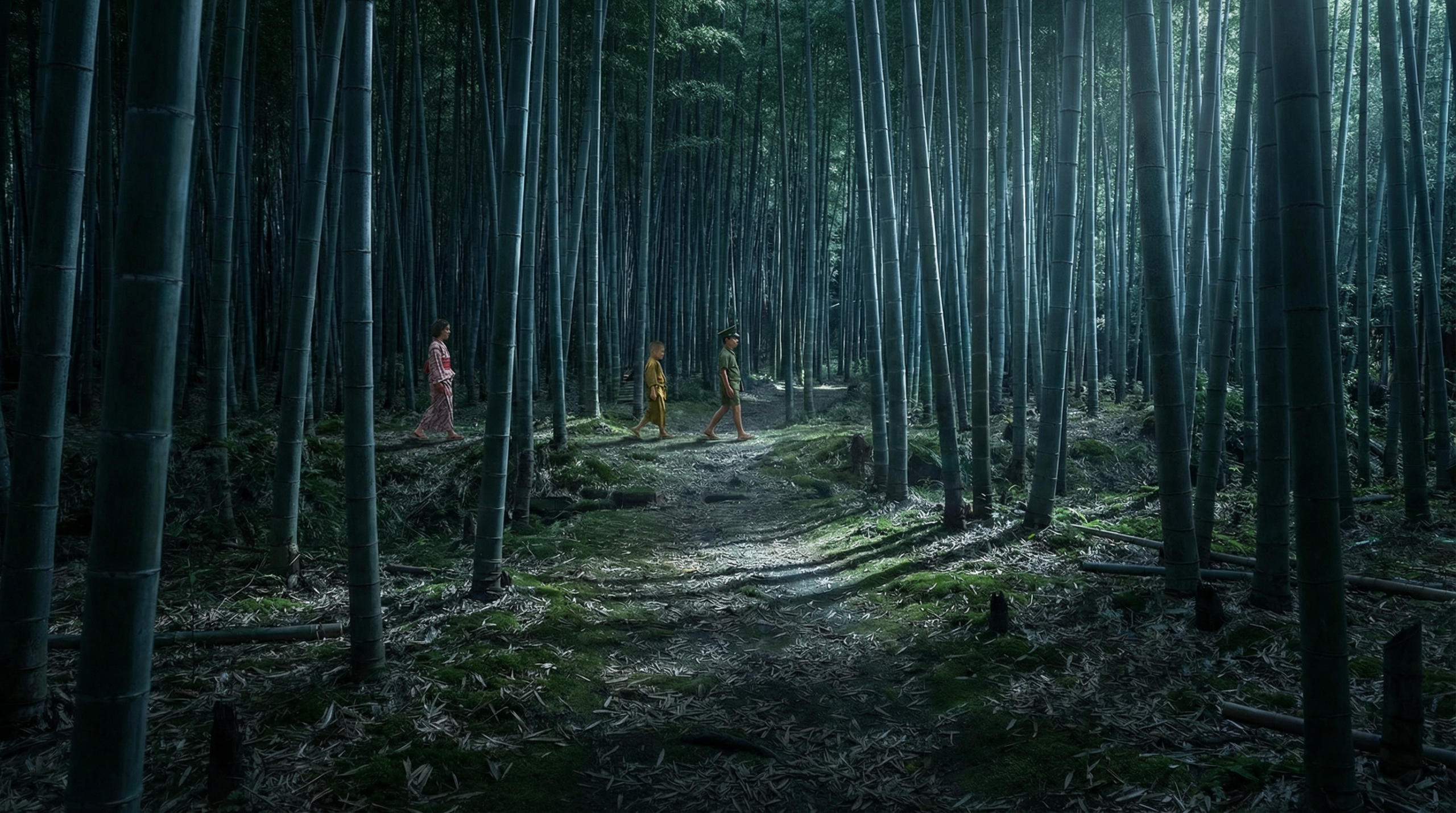
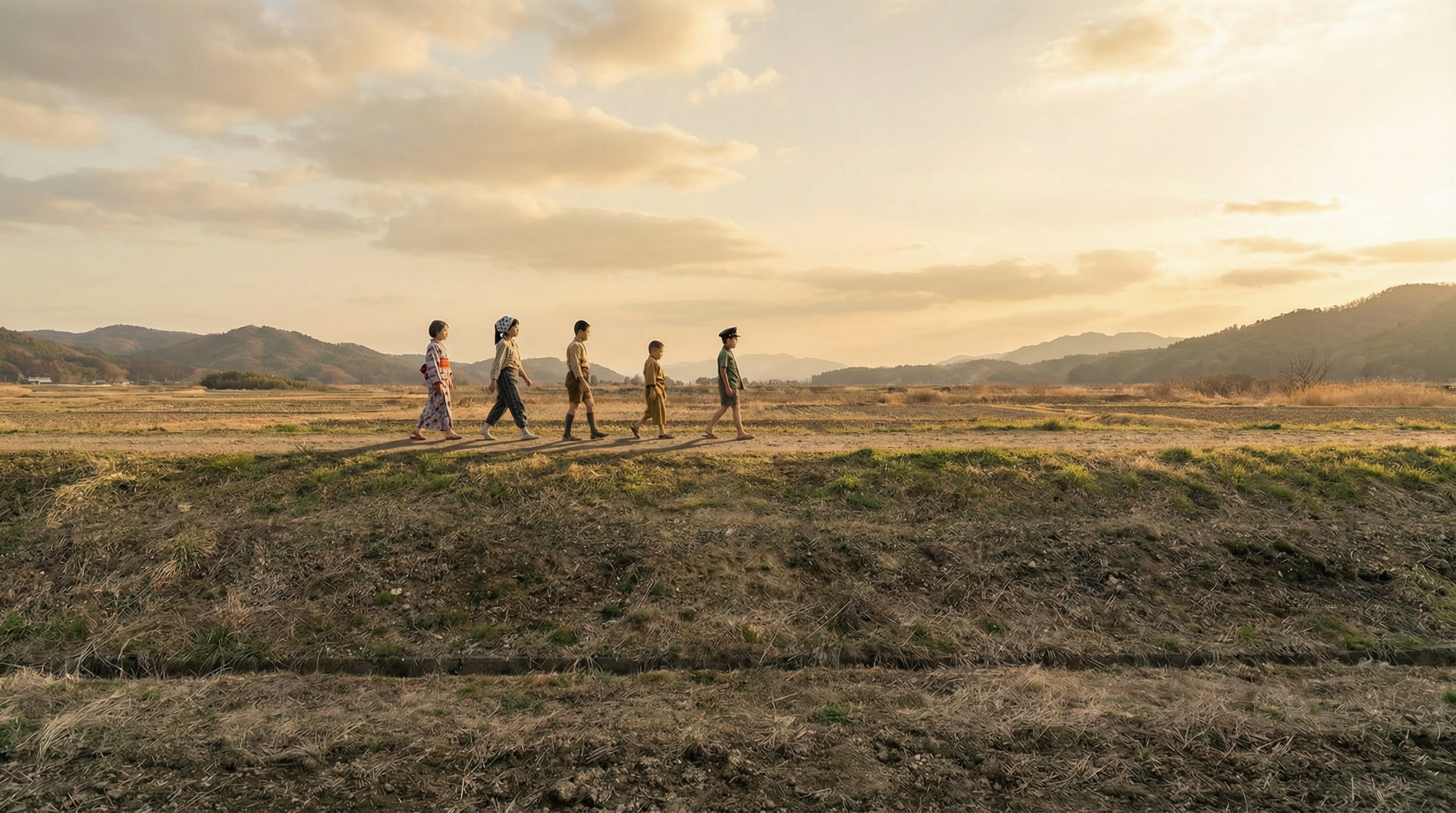
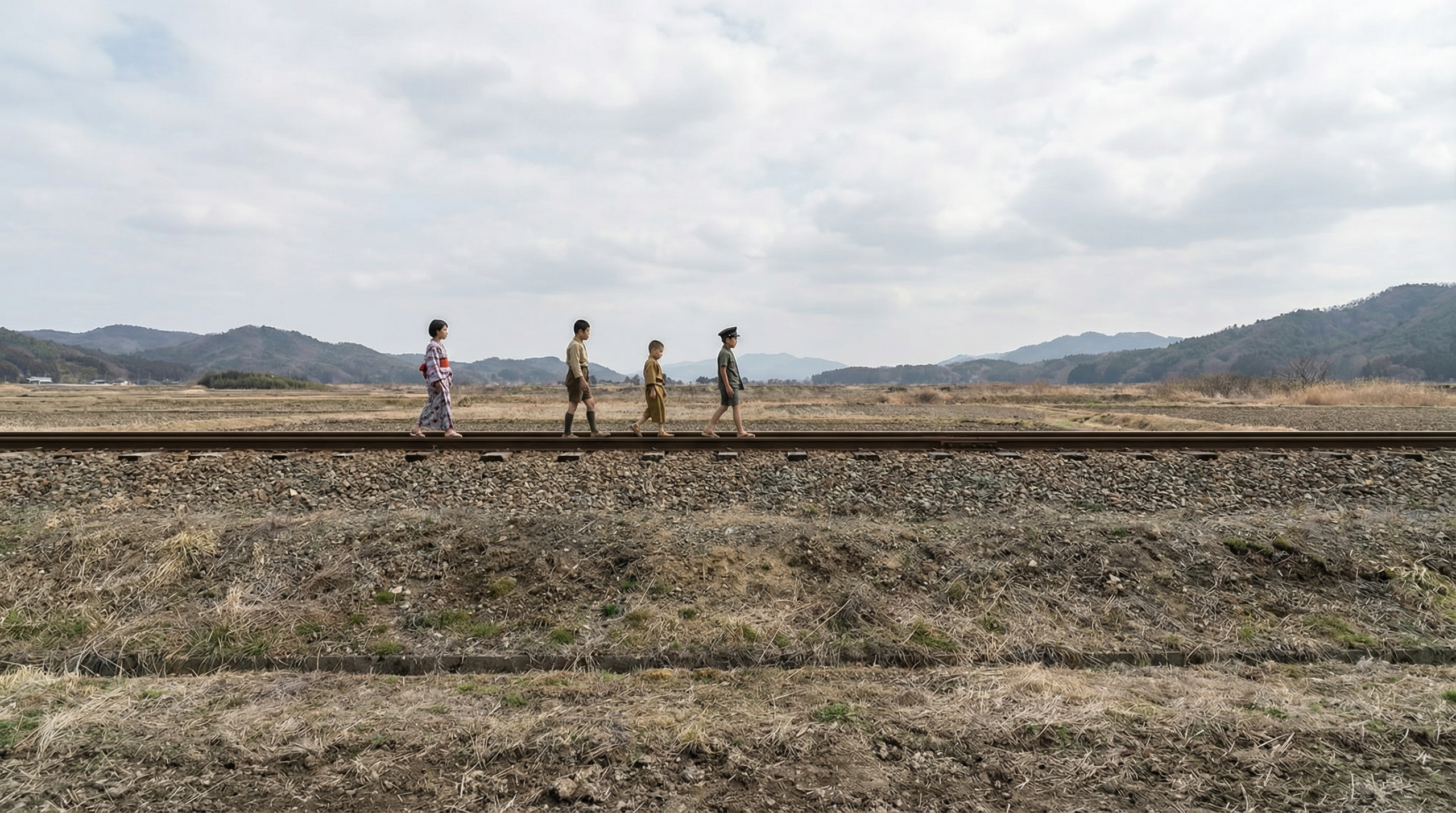
The production pipeline is fully AI-driven, combining multiple generative models across image, video, and text. Character design and casting were developed through iterative image generation, ensuring consistency across expressions, age, and wardrobe, as seen in the still frames and model sheets. Environments such as pre-war Hiroshima, rural landscapes, and post-destruction scenarios were constructed using text-to-image workflows, then brought to life through advanced video models. Narrative development and prompting were handled using LLMs, while sound design, voice-over, and editing completed the cinematic experience.
The visual language evolves throughout the trailer, moving from warm, natural tones and peaceful rural scenes to desaturated, fragmented compositions that reflect the aftermath of the bombing. This contrast reinforces the emotional arc and mirrors the transformation of the protagonist. The use of framing, light, and pacing is designed to emulate live-action filmmaking, bridging the gap between illustration and cinematic realism.
By combining historical storytelling with cutting-edge AI tools, this project demonstrates how generative workflows can be used not only for conceptual exploration but also for crafting emotionally resonant narratives. It highlights the potential of AI in film development, particularly in early-stage visualization, storyboarding, and speculative adaptations of existing works.
Note: This is a fictional, non-commercial project created for educational purposes. It is not affiliated with or endorsed by the original creators or rights holders of Barefoot Gen.







Explore More
Explore More
Explore More
Explore More
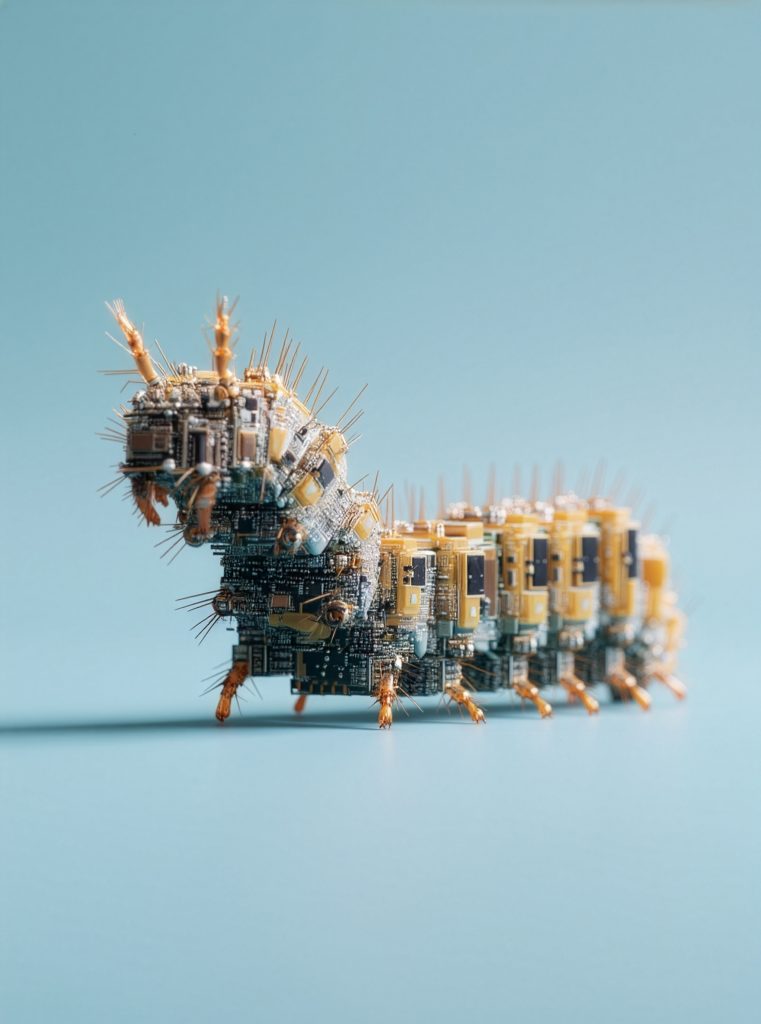
Silicon Fauna